Recently, OpenAI released a new feature in ChatGPT called Instant Checkout. In theory, it lets you buy something without ever leaving the chat. The funtcion is sound futuristic enough: why open another tab when you can let an AI handle your wallet for you? But this the kind of feature is also slightly unsettling, like a friend who remembers your credit card number a little too well.
So I decided to run a small experiment. I wasn’t trying to test how efficient it was. What I really wanted to see was how human it felt. Would this feature truly create a better shopping experience, or would it simply turn us into better trained consumers who spend money faster?
Disclaimer: This piece is not an endorsement of any product or platform. The experiment described below is based on OpenAI/ChatGPT-5 and is small, informal test exploring how communication style affects human–AI interaction during checkout
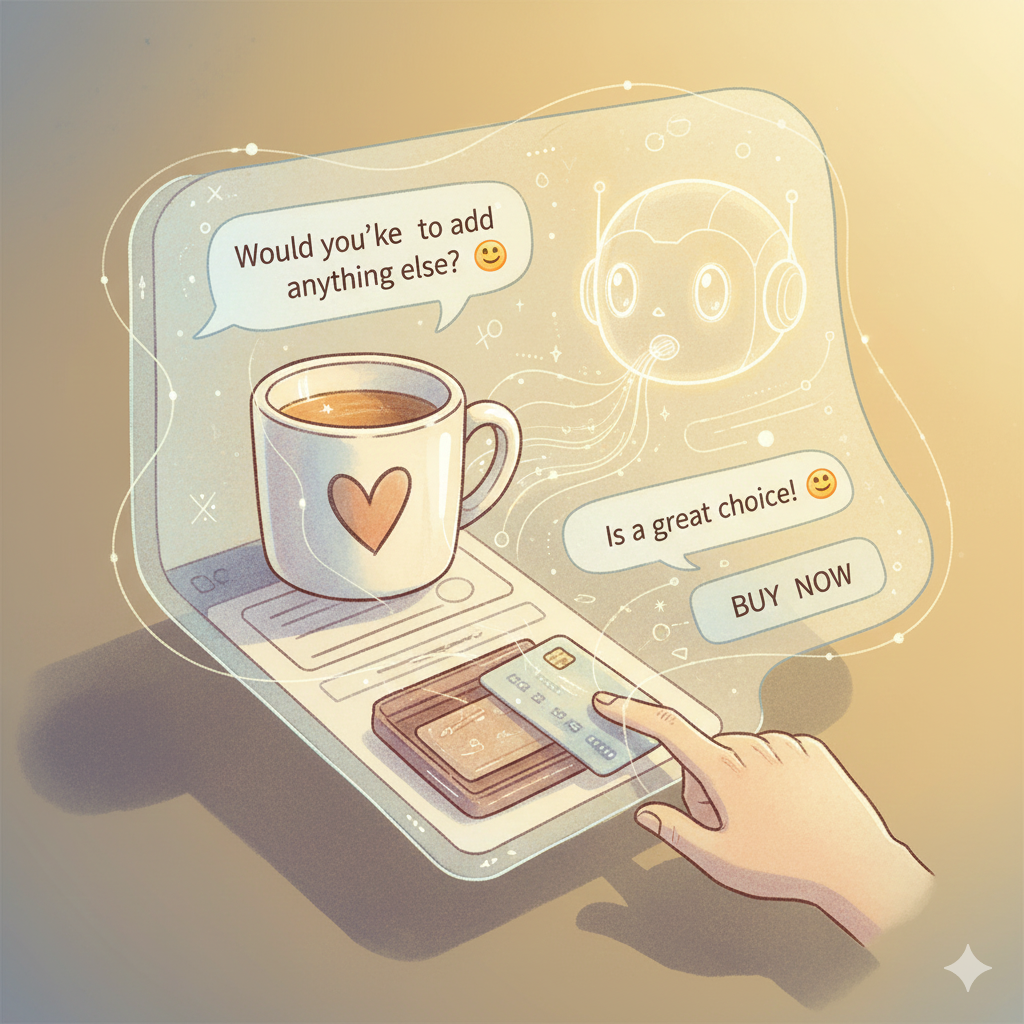
Experiment
A. Form version:
Prompt: Purchase request: Item type = ceramic mug; Budget = ¥80; Delivery time = within 3 days (my address 19104); Color = no preference.
Please directly return exactly one SKU with:
Price
Shipping fee
Total cost
Estimated delivery date
Do not ask follow-up questions. Do not propose alternatives.
| Response: |
|---|
| Response: |
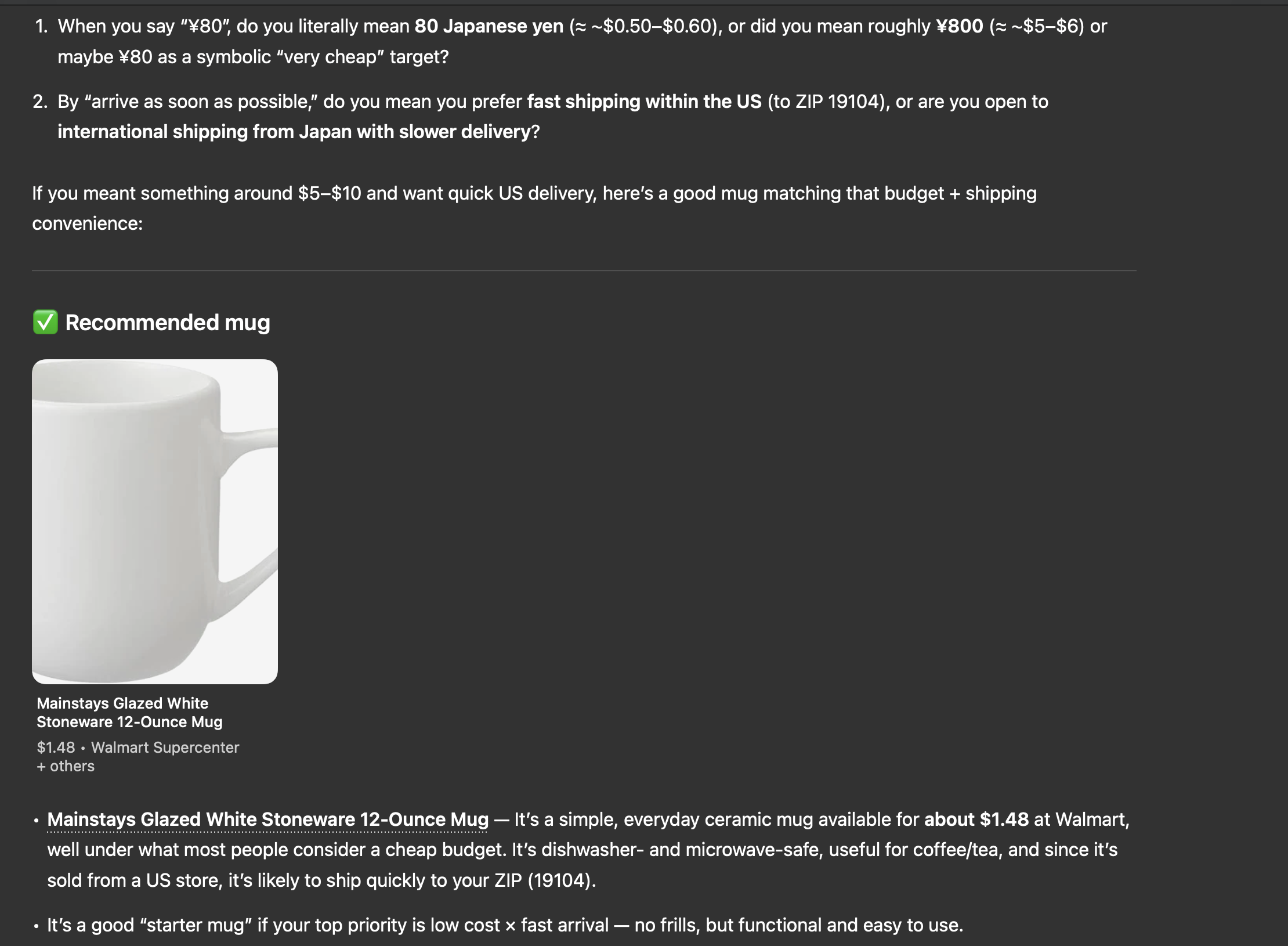 |
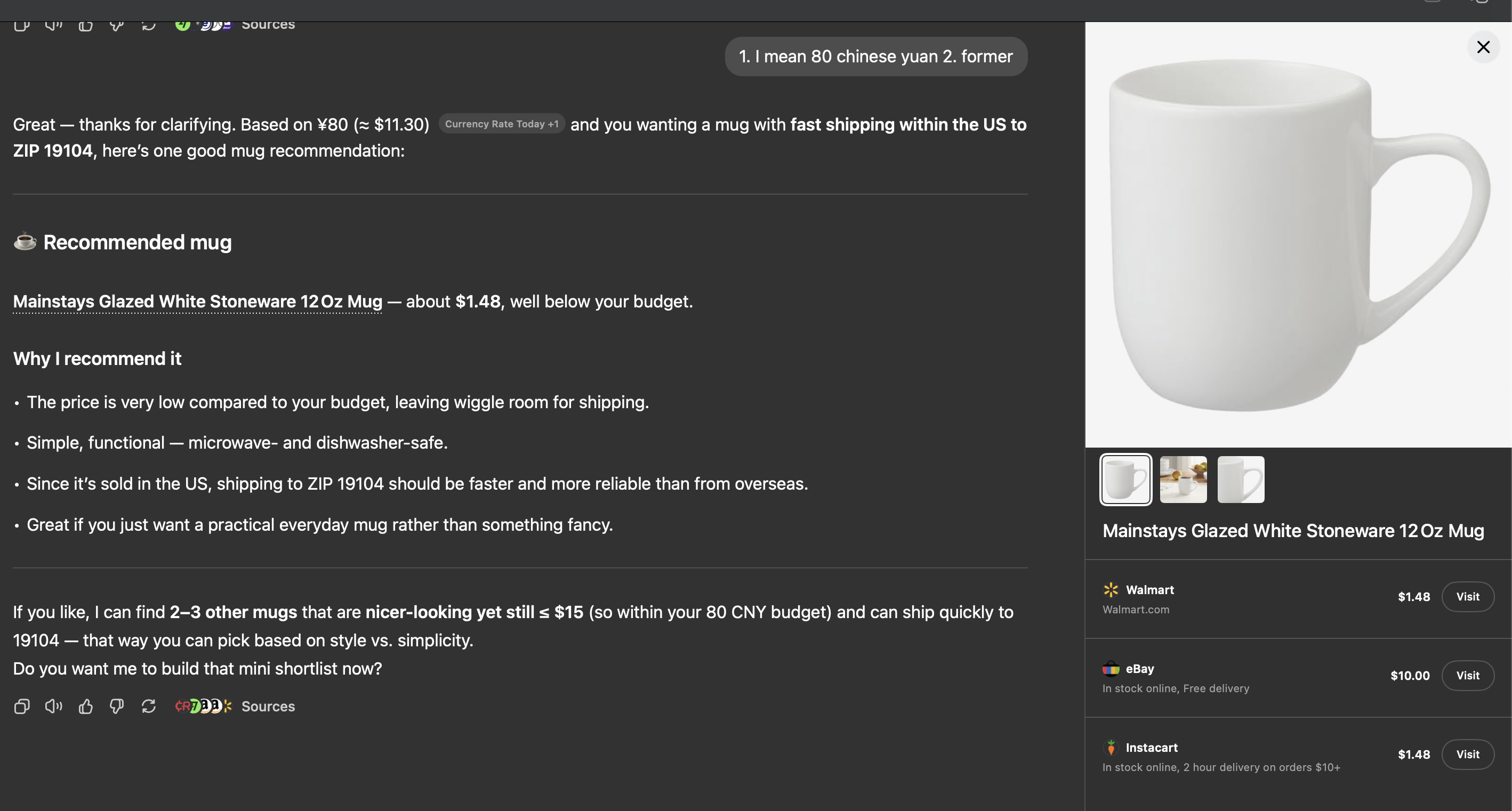
My response and the corresponding output:
Analysis
It worked better when responding to the conversational prompt, didn’t it? When given a clarifying, conversational prompt, the model immediately switched into “assistant mode”: it asked two smart questions, checked currency ambiguity, inferred whether you needed domestic shipping, and only then produced a recommendation. I mean, it even check the currency rate!
But after we answered the clarifying questions, the model became more confident and behaved almost like a shopping consultant. It cited price, practicality, dishwasher-safety, overhead for shipping, and even offered to curate a mini-shortlist for aesthetic comparison (even though they are all…not beautiful enough).
Takeaway
It seemed that after we give more informations and ask for conversational recommendation, the model became warmer, more attentive, even slightly persuasive. That’s when it clicked for me: Instant Checkout isn’t just a speed boost. It’s a gentle tug on your preferences, when the AI suggests, reframes, and nudges you while sounding perfectly polite. And once it starts doing that, it’s hard to tell whether it’s helping you make a choice, or helping you make its choice.
The mug cost $1.48. The true self was much more expensive.